What Is an IGI Certificate and Why It Matters for Your Diamond
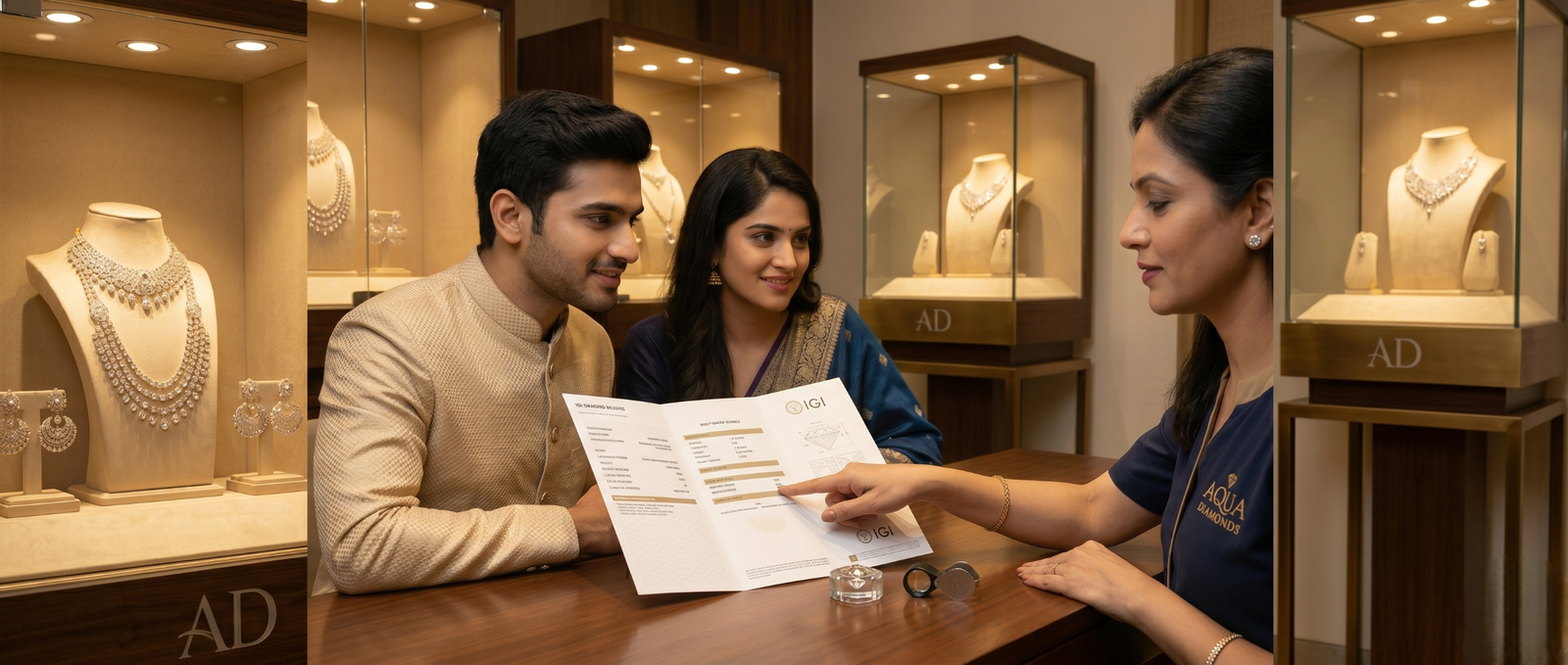
Walk into a jewellery showroom anywhere from Banjara Hills to Begum Bazaar, and you’ll notice something interesting — the experienced buyers don’t ask to see the diamond first. They ask to see the paperwork. That small folded card, often overlooked by first-time buyers, is what separates a confident purchase from an expensive guessing game.
That card is usually an IGI certificate, and it’s quietly become one of the most important documents in Indian diamond buying. It tells you what you’re actually paying for — the cut, the clarity, the carat, the colour, and most importantly, whether the stone is exactly what the seller claims it to be.
If you’re shopping for an engagement ring, a pair of diamond studs for a wedding, or your first solitaire investment, understanding what an IGI certificate is — and why it matters so much for IGI certified diamonds in India — could save you from overpaying or, worse, being misled. Let’s break it down properly.
What Exactly Is an IGI Certificate?
An IGI certificate is a detailed report issued by the International Gemological Institute after a diamond has been independently examined under controlled laboratory conditions. Think of it as a diamond’s official identity document — it records the stone’s exact specifications so that what you’re shown matches what you eventually take home.
Who Is IGI (International Gemological Institute)?
Founded in 1975, IGI is one of the largest independent gem certification organisations in the world, with laboratories across major diamond trading hubs including Mumbai, Surat, New Delhi, Antwerp, New York, and Hong Kong. Because India is one of the largest diamond cutting and polishing centres globally — Surat alone processes a massive share of the world’s diamonds — IGI built a strong, accessible network of labs right here, which is one reason its certificates are so widely seen in Indian jewellery stores.
Unlike a jeweller grading their own stock, IGI has no commercial stake in whether you buy a particular diamond. Their gemologists assess the stone purely on its physical and optical properties, using standardised tools and methods that don’t vary from one diamond to the next.
What Information an IGI Certificate Contains
A genuine IGI report isn’t a vague “quality guarantee.” It’s a precise technical document that typically includes:
- Carat weight — measured to the hundredth of a carat
- Cut grade — how well the diamond has been proportioned and faceted
- Colour grade — on the standard D-to-Z scale
- Clarity grade — the presence, size, and position of any internal or surface characteristics
- Measurements — exact diameter and depth in millimetres
- Polish and symmetry — finishing quality of the facets
- Fluorescence — whether the diamond glows under UV light, and how strongly
- A unique report number, often matched with a laser inscription on the diamond itself
- A clarity plot diagram showing the approximate location of inclusions
This is precisely the kind of information you need before agreeing on a price, because two diamonds that look similar to the naked eye can vary in value by tens of thousands of rupees based on these details alone. If you’d like to understand how each of these factors affects both beauty and price, our diamond education guide explains the 4Cs in much greater depth.
How IGI Certificates Differ from Other Lab Reports
You’ll also come across GIA (Gemological Institute of America) certificates in the Indian market, and occasionally reports from labs like HRD or smaller regional gemological institutes. The grading methodology between IGI and GIA is broadly similar — both assess the same core parameters — though IGI has historically been known for slightly more accessible turnaround times and a larger footprint specifically within India’s diamond manufacturing belt.
What actually matters for you as a buyer isn’t which lab name sounds more prestigious, but whether the certificate is genuine, current, and matches the exact stone in front of you. A real IGI certificate from an accredited lab carries the same weight of trust regardless of which Indian city it was issued in.
Why IGI Certification Matters When Buying Diamonds in India
India’s diamond retail market is enormous and largely trust-based — many buyers still choose jewellers based on family relationships, community recommendations, and decades-old reputations. While that trust is valuable, it doesn’t replace the need for independent verification, especially as diamond jewellery purchases increasingly involve five, six, or even seven-figure sums.
IGI’s Deep Roots in India’s Diamond Trade
Because such a large share of the world’s diamonds pass through Indian cutting and polishing units before reaching retail counters, IGI established laboratories directly within India’s diamond trading centres decades ago. This means an IGI certificate isn’t an imported concept tacked onto Indian jewellery — it’s deeply woven into how diamonds move from rough stone to finished jewellery within the country.
For a city like Hyderabad, which has a long-standing culture of fine jewellery purchases tied to weddings, engagements, and milestone celebrations, this matters practically. When a jeweller in Hyderabad sources a diamond that was certified at an IGI lab in Mumbai or Surat, that certificate travels with the stone — giving you the same documentation standard you’d expect anywhere else in the country.
Building Trust in a Market Built on Relationships
There’s an old habit in Indian jewellery buying — relying on the jeweller’s word, a handshake, and a long-standing family connection. That trust is real and valuable, but it works best when it’s paired with documentation, not instead of it.
An IGI certificate doesn’t replace your jeweller’s expertise — it confirms it. When a jeweller proactively shows you the certificate, explains what each grade means, and lets you verify it independently, that’s a sign they’re confident in what they’re selling. It shifts the conversation from “trust me” to “here’s the proof, and here’s why I’m recommending this particular stone for your budget and occasion.”
Protecting Your Investment for Resale and Inheritance
Diamond jewellery in Indian households often isn’t just an accessory — it’s passed down through generations, used as collateral in financial emergencies, or resold during life events. An IGI certificate becomes part of that diamond’s permanent record.
If your daughter inherits your diamond pendant twenty years from now, or if you need to have a piece appraised for insurance or resale, the original certificate provides an objective starting point. Without it, any future valuation depends entirely on someone’s visual assessment — which can vary significantly and may undervalue a genuinely good stone simply because there’s no paperwork to support its quality.
How to Read Your IGI Certificate Like a Pro
Most people glance at an IGI certificate, see a wall of numbers and abbreviations, and move on without really understanding it. But learning to read even the basics puts you in a much stronger position during negotiations — and helps you spot inconsistencies if something doesn’t add up.
Understanding the 4Cs on Your Report
The four most-discussed factors — carat, cut, colour, and clarity — each appear as specific grades on your certificate, not vague descriptions.
- Carat is listed as a precise decimal (for example, 1.02 ct), not rounded to “1 carat approx.”
- Colour is shown as a single letter from D (completely colourless) through Z (noticeably yellow or brown), with most jewellery-grade diamonds falling between G and J.
- Clarity is graded on a scale from FL (Flawless) down through categories like VVS, VS, SI, and I, based on how visible inclusions are under 10x magnification.
- Cut is graded from Excellent to Poor, based on how well the diamond’s proportions allow it to reflect light.
A diamond with a slightly lower colour grade but excellent cut can often appear brighter and more attractive than a higher colour-grade stone with a mediocre cut — which is exactly why reading the full certificate, rather than fixating on one number, matters.
Clarity and Inclusion Maps Explained
One of the most useful — and most ignored — parts of an IGI certificate is the clarity plot, a small diagram of the diamond from above showing the approximate position of any inclusions (tiny internal marks) or blemishes (surface marks).
This diagram serves two purposes. First, it helps confirm that the certificate genuinely belongs to the stone you’re being shown — a jeweller can hand you a loupe and point out the exact inclusion marked on the diagram. Second, it gives you a sense of whether any inclusions are positioned under the table (the flat top facet, where they’d be more visible) or hidden near the edges under the setting, where they’ll never be seen once the diamond is mounted.
Laser Inscriptions and Online Verification
Most IGI certified diamonds above a certain carat weight carry a microscopic laser inscription on the edge of the stone — typically the certificate number — visible only under magnification. This inscription is your direct link between the physical diamond and its paper (or digital) report.
To verify a certificate, IGI provides an online report-checking service where you can enter the certificate number from your document and confirm that the details match — same carat weight, same grades, same measurements. We’d strongly encourage doing this before finalising any purchase, and any reputable jeweller in Hyderabad will happily walk you through the process at the counter.
Natural vs Lab-Grown — How IGI Certifies Both
One area that causes genuine confusion is that IGI certifies both natural diamonds and lab-grown diamonds — and the certificates can look similar at first glance if you’re not paying attention to the header.
IGI Reports for Natural Diamonds
For natural diamonds — formed deep within the earth over billions of years and mined from the ground — IGI issues a standard Diamond Report. This report confirms the stone is natural (not lab-grown, not simulant, not treated in undisclosed ways) and then proceeds to grade it on the standard 4Cs criteria.
This is the report you want if your priority is a diamond with natural origin — which remains the preference for the vast majority of fine jewellery buyers in India, particularly for heirloom pieces, bridal jewellery, and investment-grade purchases.
IGI Reports for Lab-Grown Diamonds
Lab-grown diamonds are chemically identical to natural diamonds but created in controlled laboratory environments over weeks rather than over geological time. IGI certifies these too, but the report header is clearly marked “Laboratory Grown Diamond Report” — a distinction that, by law and by IGI’s own standards, must be disclosed prominently and cannot be omitted or hidden.
The grading scales used are similar, but the report itself is designed to make the origin unmistakable, both on paper and through the laser inscription on the stone, which usually includes the words “Lab Grown” alongside the report number.
Why We Choose 100% Natural, IGI-Certified Stones
At Aqua Diamonds & Jewels, every diamond we sell is 100% natural and IGI certified — meaning the report you receive will always carry the standard Diamond Report header, not the lab-grown variant. We made this choice deliberately, because for most of our clients — whether they’re selecting an engagement ring or a piece meant to be passed down — natural origin is part of the value and the story behind the diamond.
When you receive your certificate from us, the header itself is the first confirmation of what you’re holding. We’ll walk you through it personally, point out the laser inscription under magnification, and show you exactly how to verify it independently if you’d like.
Buying an IGI Certified Diamond for Indian Occasions
Diamond purchases in India rarely happen in isolation — they’re tied to specific moments: an engagement, a wedding, a milestone anniversary, or a festival considered auspicious for buying gold and gemstones. Knowing what to prioritise for each occasion helps you get more value from your certificate, not just from the stone.
Engagement Rings and Wedding Jewellery
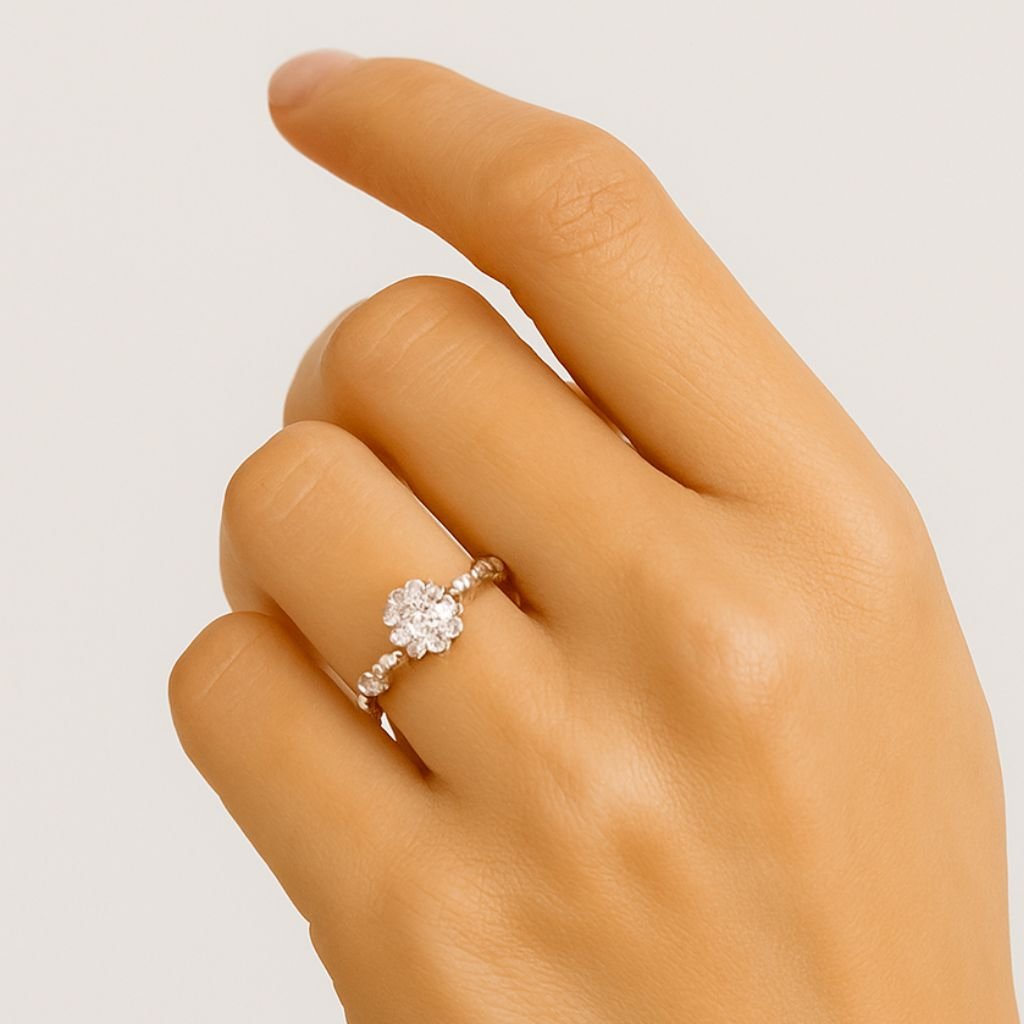
For a solitaire engagement ring — increasingly popular across Hyderabad alongside traditional gold jewellery — the certificate becomes especially important because the diamond is often the single most expensive component of the piece, and it’s worn daily for decades.
For these purchases, we recommend paying close attention to cut grade and clarity in the VS to SI range, which offer excellent visual brilliance without inclusions visible to the naked eye, while keeping the budget focused where it matters most. Your IGI certificate gives you the confidence to make this trade-off knowingly, rather than guessing.
Festive Gifting — Diwali, Akshaya Tritiya, Anniversaries
Diamonds bought during auspicious periods like Akshaya Tritiya, Diwali, or Ugadi often carry sentimental weight beyond their monetary value — they’re meant to mark a beginning, a blessing, or a milestone. An IGI certificate ensures that sentimental purchase is also a sound one.
It’s also worth keeping the certificate safely with your other important documents, alongside the bill and warranty card, since festive purchases are often gifted within the family and the paperwork may need to travel with the piece to a different household.
Everyday Care Tips for Your Certified Diamond
A diamond’s hardness makes it resistant to scratching, but not to everything else. A few practical habits go a long way:
- Remove rings before applying creams, perfumes, or hair oil — these can build up behind the stone and dull its brilliance over time, especially in Hyderabad’s warmer, humid months.
- Clean gently at home using a soft brush with mild soap and lukewarm water, then dry with a lint-free cloth — avoid ultrasonic cleaners for pieces with other gemstones or delicate settings.
- Store pieces separately in soft pouches or compartments, since diamonds can scratch other jewellery — including other diamonds.
- Get prongs checked annually, particularly for rings worn daily, as a loose prong is the most common cause of a “lost” diamond.
- Keep your certificate and bill together in a fireproof folder or locker — not just for insurance, but because it documents exactly what you own.
Why Choose Aqua Diamonds & Jewels
We’ve built our reputation in Hyderabad on a simple principle — show the buyer exactly what they’re paying for, before they decide. Every diamond at Aqua Diamonds & Jewels comes with its own IGI certificate, and we’ll go through it with you personally, in plain language, with the loupe in your hand if you’d like to see the laser inscription yourself.
Every stone we sell is 100% natural, never undisclosed lab-grown or treated material, and every piece is backed by our 1-year warranty covering manufacturing defects and settings — because standing behind our jewellery after the sale matters as much as how it looks at the counter.
Whether you’re choosing a solitaire for a proposal, diamond jewellery for a wedding trousseau, or a meaningful gift for a milestone occasion, our team takes the time to match the right certified stone to your budget, your occasion, and what matters most to you — brilliance, size, or value. No pressure, no rushed decisions — just a transparent conversation, the way buying a diamond should feel.
Frequently Asked Questions
1. What does an IGI certificate actually prove about my diamond?
An IGI certificate confirms that an independent gemological laboratory has examined your diamond and recorded its precise characteristics — carat weight, cut, colour, clarity, measurements, and finish — using standardised grading methods. For natural diamonds, it also confirms the stone is natural rather than lab-grown or simulant. It doesn’t set the diamond’s price, but it gives you and any future buyer an objective record of exactly what the stone is, removing guesswork from the valuation.
2. Is an IGI certificate as trustworthy as a GIA certificate?
Both IGI and GIA are recognised independent gemological laboratories that follow broadly similar grading methodologies for the 4Cs. IGI has an especially strong presence within India’s diamond manufacturing and trading hubs, including Mumbai and Surat, making it one of the most commonly issued certificates for diamonds sold in the Indian market. What matters most for any buyer is confirming the certificate is genuine and current, and that it matches the specific stone you’re purchasing — which you can do directly through IGI’s online verification.
3. How do I verify that my IGI certificate is genuine?
Every IGI certificate carries a unique report number, which is usually also laser-inscribed on the edge of the diamond itself (visible under magnification). You can enter this report number on IGI’s official verification platform to confirm the details on file match the certificate you’ve been given — same carat weight, grades, and measurements. If there’s any mismatch, that’s an immediate red flag, and a trustworthy jeweller will encourage you to check this rather than discourage it.
4. Does Aqua Diamonds & Jewels sell only IGI certified diamonds?
Yes. Every diamond we sell comes with its own IGI certificate, and every certificate carries the standard Diamond Report header confirming the stone is 100% natural — not the lab-grown variant. We provide this certificate at the time of purchase, walk you through what each section means, and are happy to show you the laser inscription on the stone under magnification before you decide.
5. Are IGI certified diamonds more expensive than uncertified ones?
Certification itself adds a relatively small cost compared to the value of the diamond, and that cost is typically already built into the price of certified stones rather than charged separately to you. The real value isn’t in the small price difference — it’s in knowing precisely what you’re paying for. An uncertified diamond might be priced attractively, but without independent verification, there’s no way to confirm its grade, origin, or whether the price genuinely reflects its quality.
6. What’s the difference between an IGI report for a natural diamond and a lab-grown diamond?
For natural diamonds, IGI issues a standard “Diamond Report,” confirming natural origin alongside the 4C grades. For diamonds created in a laboratory, IGI issues a separate “Laboratory Grown Diamond Report” — clearly labelled as such on the document itself and on the diamond’s laser inscription. The grading criteria for cut, colour, and clarity are similar for both, but the report header and inscription make the origin explicit, so there should never be confusion about which type of diamond you’re purchasing.
Ready to See an IGI Certified Diamond in Person?
Reading about certification is useful, but nothing replaces seeing your IGI certificate alongside the actual diamond, loupe in hand, with someone who can answer every question you have.
Read more: What Is an IGI Certificate and Why It Matters for Your Diamond