
Diamond Necklace Buying Guide: Styles, Settings & What to Look For
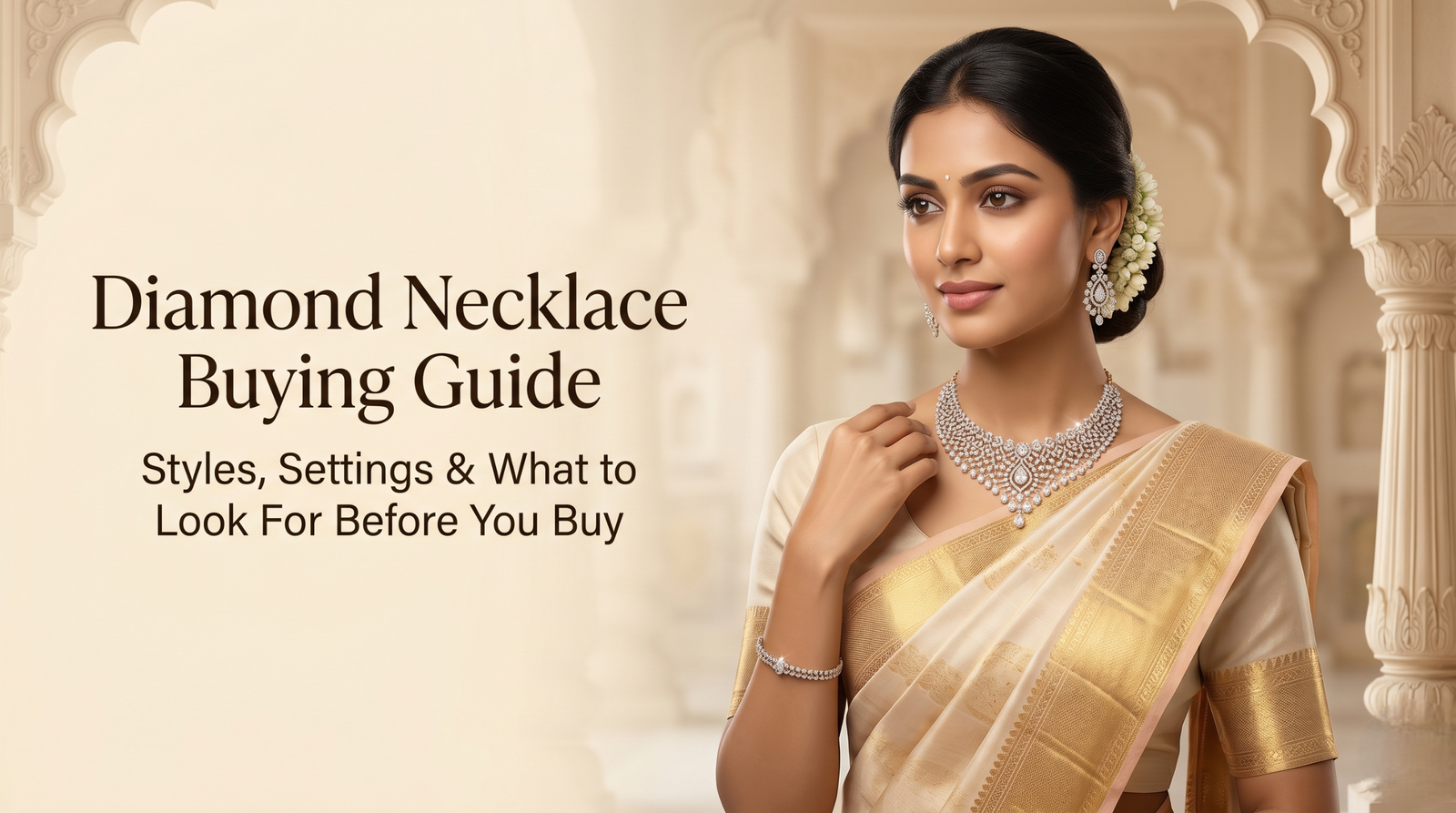
A diamond necklace is rarely just jewelry. For most Indian families, it marks something — a wedding, a milestone, a daughter’s first big gift, or a quiet act of self-celebration after years of working toward something. Which is exactly why the decision deserves more than a quick scroll through social media.
This diamond necklace buying guide for India is built around how Indian buyers actually shop: with a mix of emotion, practicality, and the very reasonable expectation that the piece will last decades and carry meaning. Whether you’re considering a solitaire pendant for everyday wear, a layered diamond set for a Telugu wedding, or a classic tennis necklace as an anniversary gift, this guide walks you through styles, settings, metal choices, certification, and the questions worth asking before you buy.
By the end, you’ll know exactly what to look for — and feel confident making a choice you’ll be proud of for years.
1. Understanding Diamond Necklace Styles: What Works for Which Occasion
Not every diamond necklace is interchangeable. Style, setting, and silhouette all affect whether a piece feels right at a mehendi ceremony, a corporate dinner, or a lazy Sunday. Here’s how to read the landscape.
The Solitaire Pendant: Timeless and Understated
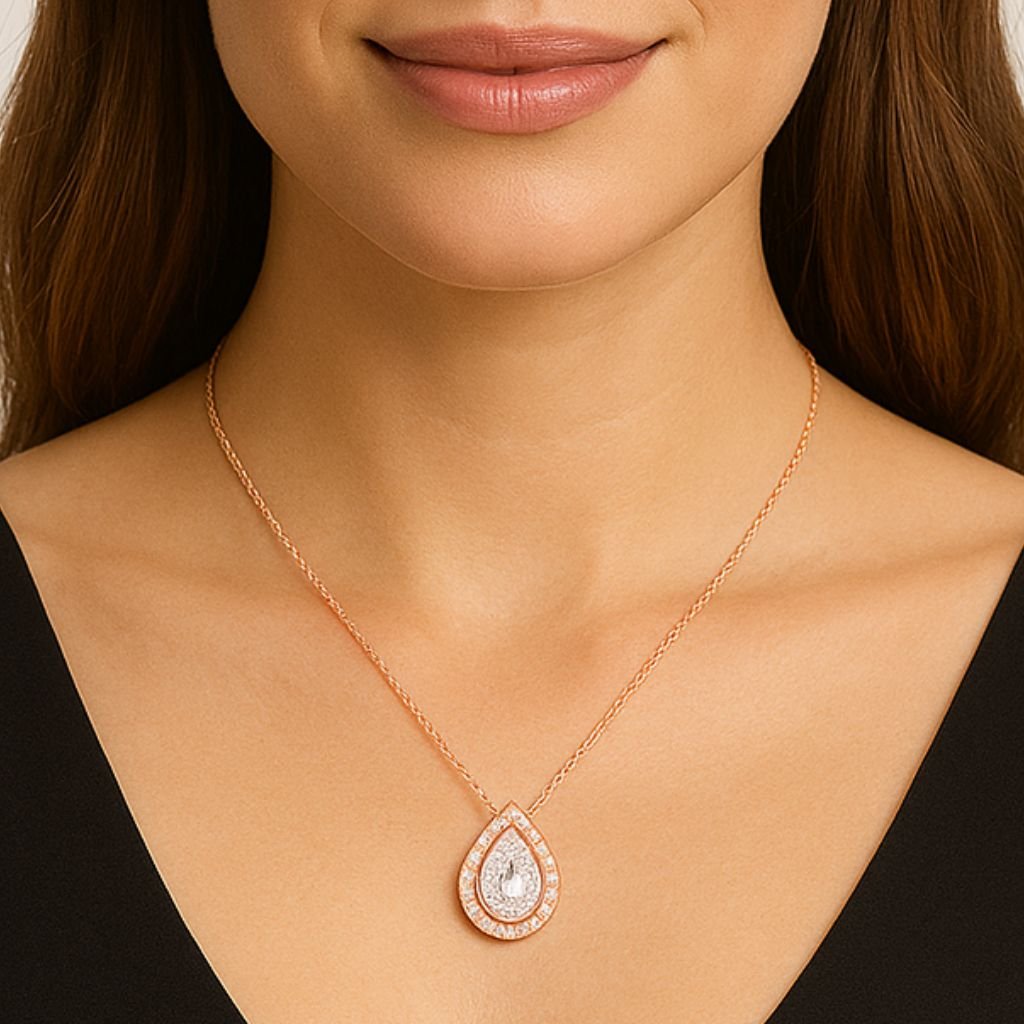
A single diamond on a delicate chain is among the most enduring choices in fine jewelry. It sits close to the collarbone, draws attention without demanding it, and pairs beautifully with Indian and Western silhouettes alike. For working women in Hyderabad who want everyday luxury, a solitaire pendant in 18kt gold is often the first — and most-reached-for — piece they own.
Browse our full range of diamond pendants to see how different diamond shapes and settings change the feel of a single stone.
Layered and Statement Necklaces for Bridal and Festive Wear
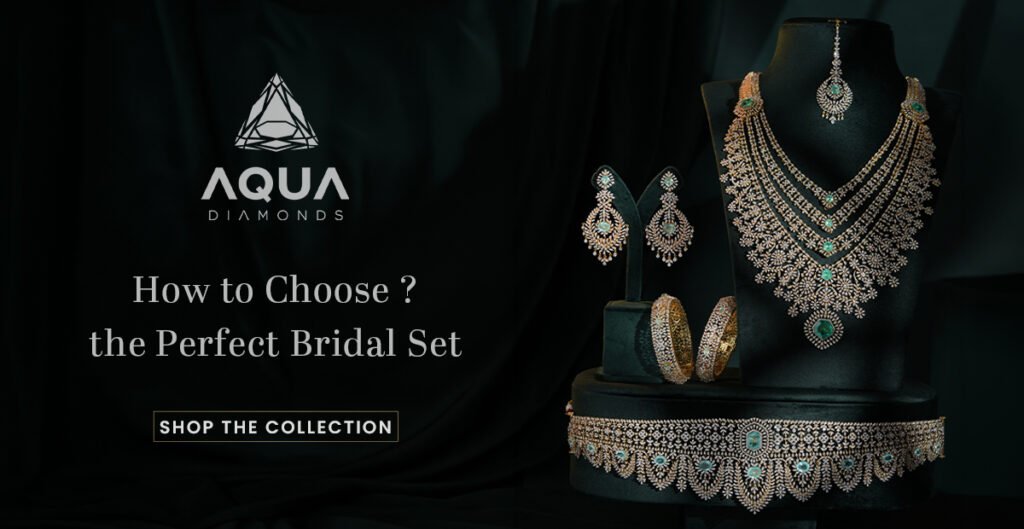
South Indian bridal jewelry has its own scale. Diamond necklaces for weddings — especially for Telugu and Telangana ceremonies — tend to be fuller, more structured, and designed to be visible across a mandap. Multi-strand diamond necklaces, collar-style sets, and graduated designs with a strong centre stone all work well here. The key is balancing the necklace with the neckline: deeper necklines need a necklace with more drop; high-collar blouses call for a choker or collar style.
Tennis Necklaces and Eternity-Style Designs
A diamond tennis necklace — a continuous line of individually set diamonds — is one of those pieces that photographs beautifully and looks expensive without announcing itself aggressively. It’s become a popular gifting choice for anniversaries and milestone birthdays among buyers in Hyderabad who want something memorable but wearable.
Explore our full neckwear collection which includes a curated range of tennis-style and layered designs.
2. Diamond Settings for Necklaces: Which One Should You Choose?
The setting is the architecture of the piece. It determines how much light the diamond catches, how secure the stone is, and how the necklace ages over years of wear. For necklaces in particular, setting choice matters because the piece moves with your body all day.
Prong Settings: Maximum Brilliance
A prong setting lifts the diamond away from the metal and exposes more of its surface to light. This is why prong-set diamonds appear to sparkle more intensely in most lighting conditions. The tradeoff: prongs can catch on fabrics, and over time, they may need to be re-tipped by a jeweler. For a solitaire pendant meant for daily wear, a bezel or flush setting is often more practical.
Bezel Settings: Security and Modernity
In a bezel setting, the diamond is fully enclosed by a thin rim of metal. It’s sleek, protects the stone well, and gives the piece a contemporary look. If you’re buying for someone with an active lifestyle, or a pendant that will genuinely be worn every day, bezel settings are worth prioritizing. They also tend to photograph cleanly with minimal distraction from the metal.
Pavé and Halo Settings: Adding Presence
Pavé settings line the band or surrounding area with small diamonds set close together, creating a surface that catches light from every angle. A halo setting places a ring of smaller diamonds around a centre stone, making the central diamond appear larger. Both techniques are popular in Indian bridal necklaces where visual weight and brilliance are important. For buyers comparing the two: pavé is more versatile across silhouettes; halos are bolder and more statement-forward.
3. The 4Cs in the Context of Necklaces: What Actually Matters
Most buyers have heard of the 4Cs (cut, colour, clarity, carat) but aren’t sure how to weight them for necklaces specifically. Rings and necklaces have different viewing distances and lighting conditions, which changes what’s actually visible to the eye.
Cut: The One C You Should Never Compromise On
Cut quality controls how much light bounces back from the diamond to your eye. A well-cut diamond in a lower colour or clarity grade will look more brilliant than a poorly cut diamond of higher grades. For necklaces — especially pendants — a good or very good cut is the minimum you should accept. Excellent cut is worth reaching for in solitaire styles where the single stone is the entire point.
Colour and Clarity: What’s Visible at Necklace Distance
Here’s the practical reality: necklaces sit further from the eye than rings. Colour differences below the H–I range are genuinely hard to detect at 45–60cm. Clarity inclusions that would be visible under a loupe at 10x magnification are almost never visible at necklace viewing distance. This means buyers can often step down slightly on colour and clarity for necklaces — VS2 or SI1 in clarity, G–I in colour — and put that budget toward a better cut or larger carat weight.
Carat Weight: Matching the Design
A solitaire pendant at 0.30ct reads well for everyday wear; for a statement occasion piece, 0.70ct and above begins to create visible presence. For bridal sets and multi-stone necklaces, the total carat weight is more relevant than any individual stone. Ask for the total diamond weight (TDW) when evaluating multi-stone designs.
Before finalising your diamond choice, we’d recommend reading our earlier piece on what an IGI certificate covers and why it matters for Indian buyers. Certification anchors every quality claim with third-party verification.
4. Metal Choices for Diamond Necklaces: Gold, White Gold, and Platinum
In India, the metal choice for diamond jewelry carries both aesthetic and emotional weight. Gold has cultural resonance; white metals offer a contemporary look; platinum signals permanence. Here’s how to think through each.
Yellow Gold: The Traditional Foundation
18kt yellow gold is the standard for diamond necklaces in India. It’s durable enough for daily wear, contains enough alloy to resist scratching, and holds sentimental value in most South Indian families. 22kt gold is softer and better suited to gold-heavy traditional pieces without diamonds; 18kt is the right choice when you’re setting stones. The warm tone of yellow gold complements near-colourless diamonds (H–J range) particularly well, as the warmth of the metal masks any slight tint in the stone.
White Gold: Modern Versatility
White gold gives the visual impression of platinum at a lower price point. It’s popular in contemporary necklace designs where a cleaner, colder contrast with the diamond is desired. Over time, the rhodium plating on white gold can wear off, requiring re-plating every few years — a maintenance point worth knowing before purchase.
Platinum: Investment-Grade Durability
Platinum is denser and more durable than gold, and its natural white colour doesn’t fade or require re-plating. For buyers considering a diamond necklace as a genuine investment piece meant to be passed to the next generation, platinum is worth the premium. If you’re navigating the natural vs. lab-grown diamond question alongside your metal choice, platinum makes the strongest case for natural diamonds given the long-term value alignment of both materials.
5. Buying a Diamond Necklace in India: What to Check Before You Pay
The Indian market for diamond jewelry has matured significantly, but it’s still common for buyers to make purchases based on trust alone — without checking the things that actually protect them. Here’s what to verify.
IGI Certification: Non-Negotiable
Every individual diamond of significance should come with an IGI (International Gemological Institute) certificate. The certificate is a grading report, not a valuation — it tells you exactly what the diamond is (cut, colour, clarity, carat), so you can compare it against what you were told and what you paid. At Aqua Diamonds & Jewels, all our diamonds are IGI-certified, which means every piece you buy comes with this third-party assurance built in.
Natural vs. Lab-Grown: Know Which You’re Buying
Lab-grown diamonds are optically and chemically identical to natural diamonds. They also cost significantly less. Neither is inherently better — but you should always know which you’re purchasing, and the certificate will confirm this. We stock exclusively 100% natural diamonds at Aqua Diamonds & Jewels, which matters to buyers who prioritise long-term resale value and the provenance of their stones. Read our detailed breakdown of natural vs. lab-grown diamonds to understand which makes more sense for your specific situation.
Warranty, Hallmarking, and After-Care
BIS hallmarking on the gold confirms purity. Beyond that, ask specifically about the warranty terms. Aqua Diamonds & Jewels offers a 1-year warranty on all pieces, covering manufacturing defects and craftsmanship. This matters more than it sounds: necklace clasps, prong settings, and fine chain links are all stress points over time, and a warranty gives you a clear path to resolution if something needs attention.
If you’re buying for an engagement or bridal occasion, our guide on choosing jewelry for major milestones is worth reading as well.
Why Choose Aqua Diamonds & Jewels for Your Diamond Necklace
There are many places to buy diamond jewelry in Hyderabad. Here’s what we think makes the experience at Aqua Diamonds & Jewels genuinely different — and why it matters for a purchase as significant as a diamond necklace.
- IGI-certified diamonds on every piece, so you know exactly what you’re buying before you pay.
- 100% natural diamonds — we don’t stock lab-grown, so there’s no ambiguity in your purchase.
- 1-year warranty on all jewelry, covering craftsmanship and manufacturing — not just a token promise.
- An honest, educational approach: our team explains certification, pricing logic, and care requirements before you commit.
- Deep familiarity with South Indian occasions: we understand the difference between what works for a Pellikuthuru ceremony and a corporate anniversary, and we help you match accordingly.
- Custom design capability: if you have a specific vision for a diamond necklace — a tribute to a grandmother’s piece, a modern reimagining of a temple design — we can work with you to build it.
Explore our neckwear collection or diamond pendants online, then get in touch to discuss what you have in mind.
Frequently Asked Questions
1. What’s the right carat weight for a diamond necklace in India?
It depends on the purpose. For daily wear, 0.25ct to 0.50ct in a pendant setting is elegant without being excessive. For bridal or festive pieces where the necklace needs to be visible in photographs and across a room, 1ct total diamond weight and above is more appropriate. For multi-stone necklaces, ask for the total diamond weight (TDW) rather than focusing on individual stones.
2. Is an IGI certificate necessary for a diamond necklace?
Yes, particularly for any purchase above a certain value. The certificate is the only objective record of what the diamond is — its cut, colour, clarity, and carat weight, as graded by a neutral third party. Without it, you’re relying entirely on the jeweler’s word. At Aqua Diamonds & Jewels, IGI certification is standard across all our diamond pieces.
3. What’s the difference between a diamond necklace and a diamond pendant?
A diamond pendant is typically a single decorative element — a diamond or diamond-set motif — hung from a chain. A diamond necklace is a complete, unified piece where the diamond or diamond elements are integrated into the design of the necklace itself (such as a tennis necklace or a multi-stone choker). In practice, the two terms are often used interchangeably in retail, so it’s worth clarifying what you’re looking at with your jeweler.
4. Which gold karat is best for a diamond necklace?
18kt gold is the standard for diamond-set jewelry in India and for good reason. It’s strong enough to hold settings securely, contains enough alloy to resist everyday wear and tear, and still has significant gold content (75%). 22kt is too soft to hold diamond settings reliably over time. 14kt is harder but less common in India. For most buyers, 18kt yellow or white gold is the right choice.
5. How do I care for a diamond necklace at home?
Clean the necklace every few weeks using a soft toothbrush, a few drops of mild dish soap, and warm water. Rinse thoroughly and dry with a lint-free cloth. Avoid ultrasonic cleaners if your piece has pavé or micro-set diamonds, as the vibration can loosen small stones over time. Store the necklace separately from other jewelry — diamonds scratch gold easily. Remove the necklace before swimming (chlorine weakens metal prongs) and before applying perfume or hair products.
6. Can I customise a diamond necklace design at Aqua Diamonds & Jewels?
Yes. Custom design is one of our core offerings. Whether you’re looking to recreate a traditional South Indian diamond necklace with a modern sensibility, or you have a specific design in mind for a bridal set, we work with you through the design process. Book an appointment to speak with our design team and bring your reference images.
Ready to Find Your Diamond Necklace?
A diamond necklace is a significant purchase — one that deserves a conversation, not just a transaction. Our team in Hyderabad is available to walk you through our collection, explain certification and grading, and help you find or create a piece that fits your occasion, your style, and your budget.
Get in Touch with Aqua Diamonds & Jewels
💬 WhatsApp us: wa.me/919121118880
📅 Book an Appointment: aquadiamonds.co/book-an-appointment