
Complete Bridal Jewelry Guide for South Indian Weddings | Aqua Diamonds & Jewels
Complete Bridal Jewelry Guide for South Indian Weddings
Your wedding jewelry does not just complete your bridal look — it becomes part of your family’s story. In South Indian weddings, jewels are passed down, spoken about at every family gathering for decades, and sometimes worn by daughters and granddaughters on their own big days. That weight of meaning makes the buying decision both beautiful and high-stakes.
The problem? Most bridal jewelry guides treat this like a checklist. They tell you what to buy, never why one piece earns its place over another, or how to navigate the real decisions — budget allocation, diamond quality versus gold weight, mixing traditional temple-style neckwear with contemporary diamond pieces for the reception.
This guide was written for brides and families in Hyderabad and across South India who want to buy with clarity. Whether you are planning a traditional Telugu, Tamil, or Kannada wedding, you will find specific, practical guidance on every category of bridal jewelry — along with honest advice on what to prioritize, what to skip, and what to save.
1. Understanding the Role of Jewelry in a South Indian Wedding
1.1 Why Bridal Jewelry Is a Multi-Day Investment
South Indian weddings rarely happen in a single day. Between the Haldi, the Mehendi, the Muhurtam, and the reception, a bride typically needs three to four distinct jewelry looks. Each event carries a different aesthetic register — casual and intimate for pre-wedding functions, classical and grand for the wedding ceremony, and modern-glamorous for the reception night.
This multi-day structure means you are not buying one set of jewelry. You are building a curated wardrobe of pieces that serve different occasions while telling a coherent visual story. The bride who understands this from the start avoids two very common mistakes: over-investing in ceremony pieces that get worn once, and under-investing in reception jewelry that photographs the most on social media.
1.2 The Three Distinct Looks: Ceremony, Reception, and Pre-Wedding
Wedding Ceremony: This is the time for your heaviest, most traditional pieces — temple-style neckwear, long gold chains, broad kadas, and antique-finish bangles. The look is rooted in heritage, and heavier gold jewelry is both culturally significant and visually powerful on the mandap.
Reception: The reception is where diamond jewelry takes centre stage. Modern brides in Hyderabad increasingly choose sleek diamond necklaces, cocktail earrings, and tennis bracelets for their reception look. This is where investment in certified natural diamonds pays off photographically — well-cut stones catch light in ways that show up beautifully in photographs and videos.
Pre-Wedding Functions: Think polki sets, light jadau work, or even contemporary gold-and-pearl combinations. These are festive but not the full traditional weight of the ceremony look.
1.3 Budget Allocation: A Framework That Actually Works
The most common regret among South Indian brides is poor budget allocation — spending disproportionately on one category while compromising on another. A practical framework:
- 50–55% — Wedding ceremony jewelry (gold-heavy, traditional)
- 30–35% — Reception jewelry (diamond-focused)
- 10–15% — Pre-wedding functions and lightweight daily-wear pieces that double up
Within the reception allocation, prioritize the necklace and earrings before the bracelet or ring — these are the pieces that anchor your look in photographs.
2. Essential Bridal Jewelry Categories for South Indian Weddings
2.1 Neckwear: The Anchor of Your Bridal Look
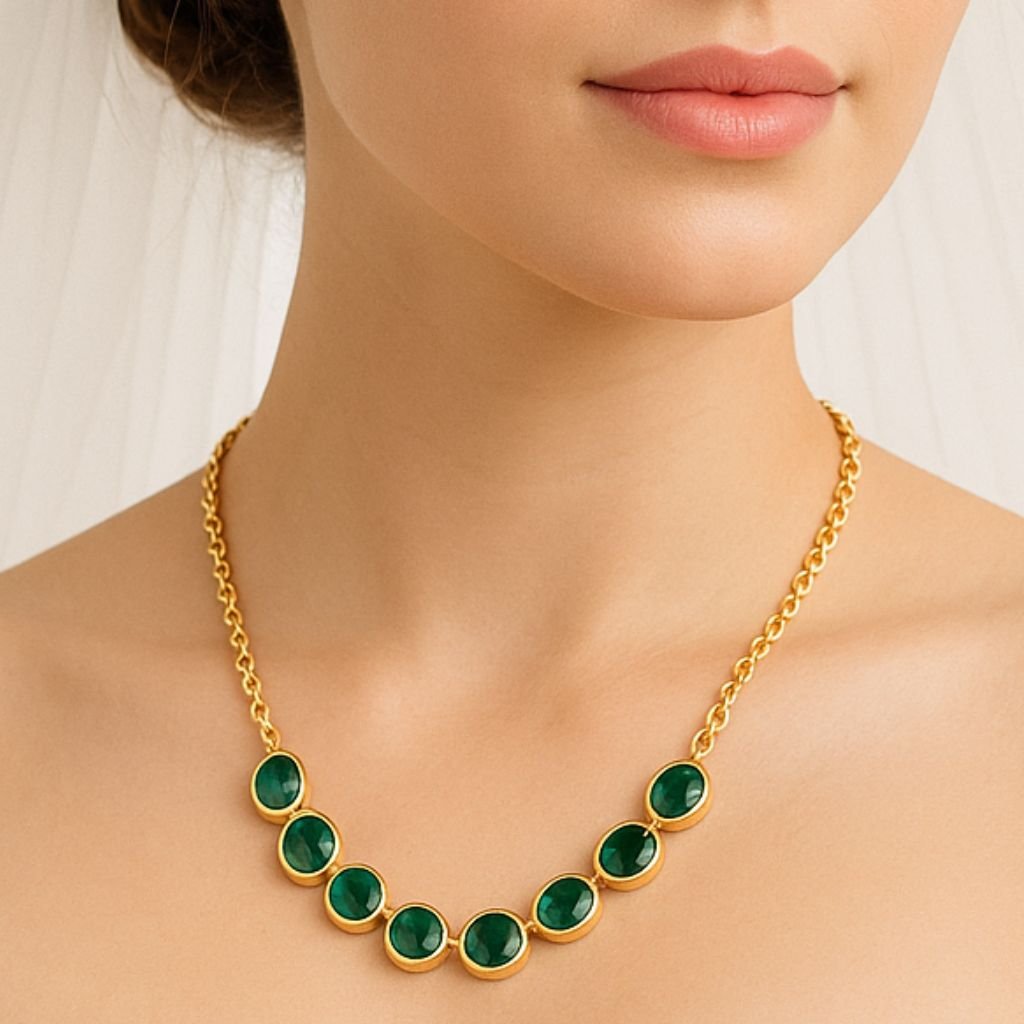
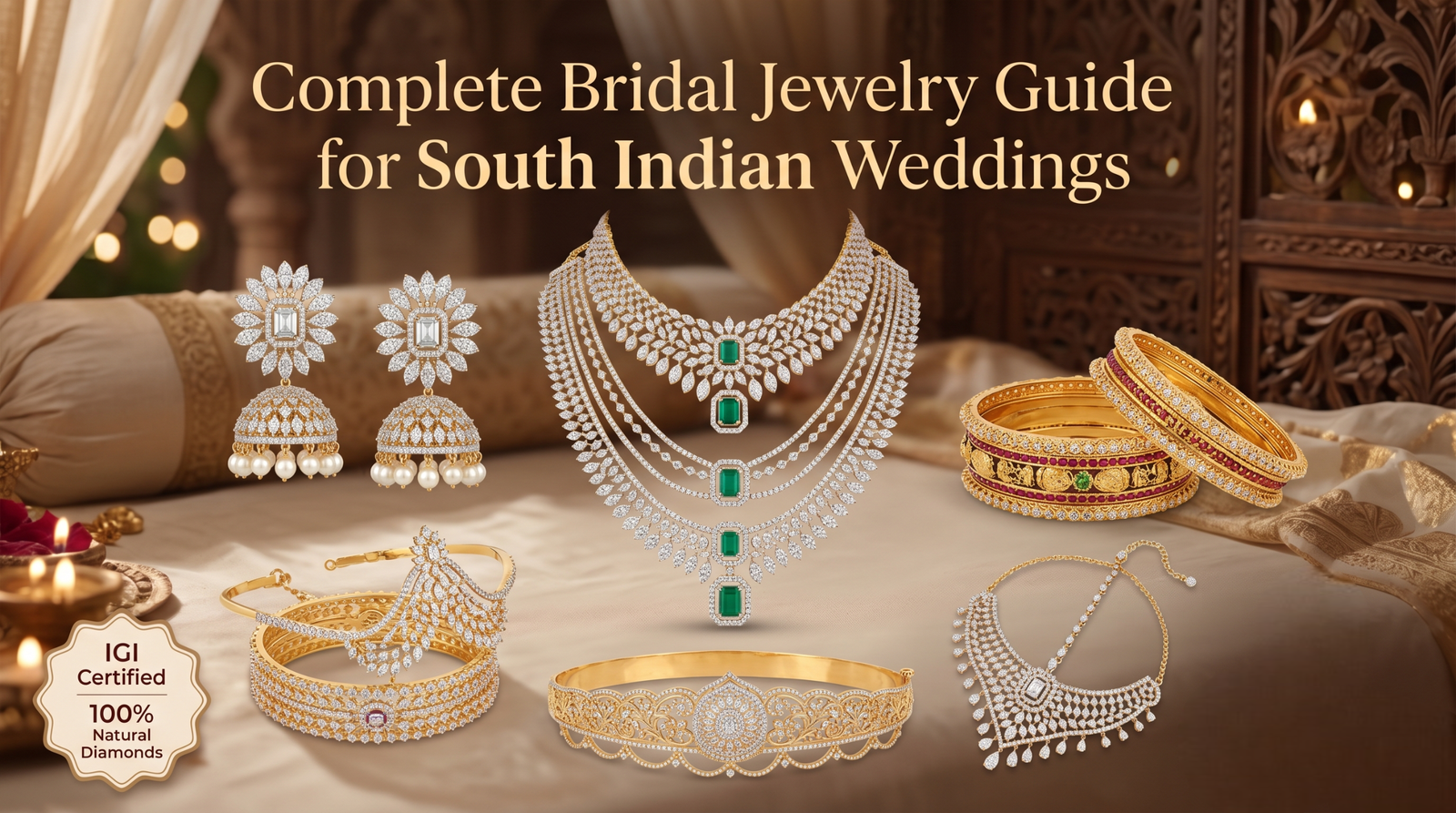
In South Indian bridal tradition, neckwear is never a single piece. Most brides layer three to five distinct necklaces — the Manga Mala (mango necklace), the Lakshmi Haar, a shorter coin necklace, and a gold chain — creating that full, layered look that is iconic to Telugu and Tamil weddings.
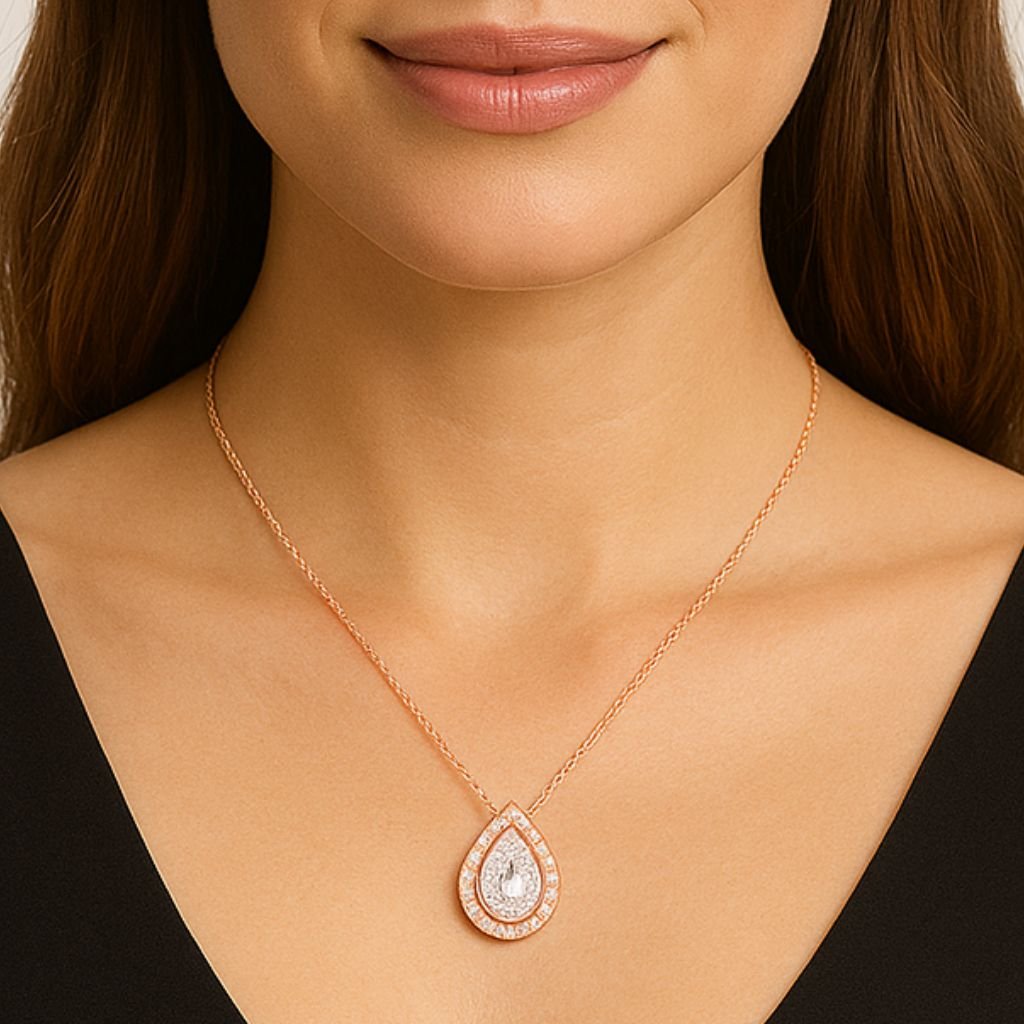
At Aqua Diamonds, our neckwear collection ranges from handcrafted temple-style gold pieces to contemporary diamond necklaces for reception. When choosing ceremony neckwear, focus on gold purity (22KT is the standard for traditional bridal) and craftsmanship — specifically the quality of the filigree work and stone setting. For reception necklaces, the cut of the diamonds determines how the piece photographs. A well-cut round brilliant will outperform a poorly cut diamond at twice the carat weight.
2.2 Earrings: Long Jhumkas vs. Diamond Drops
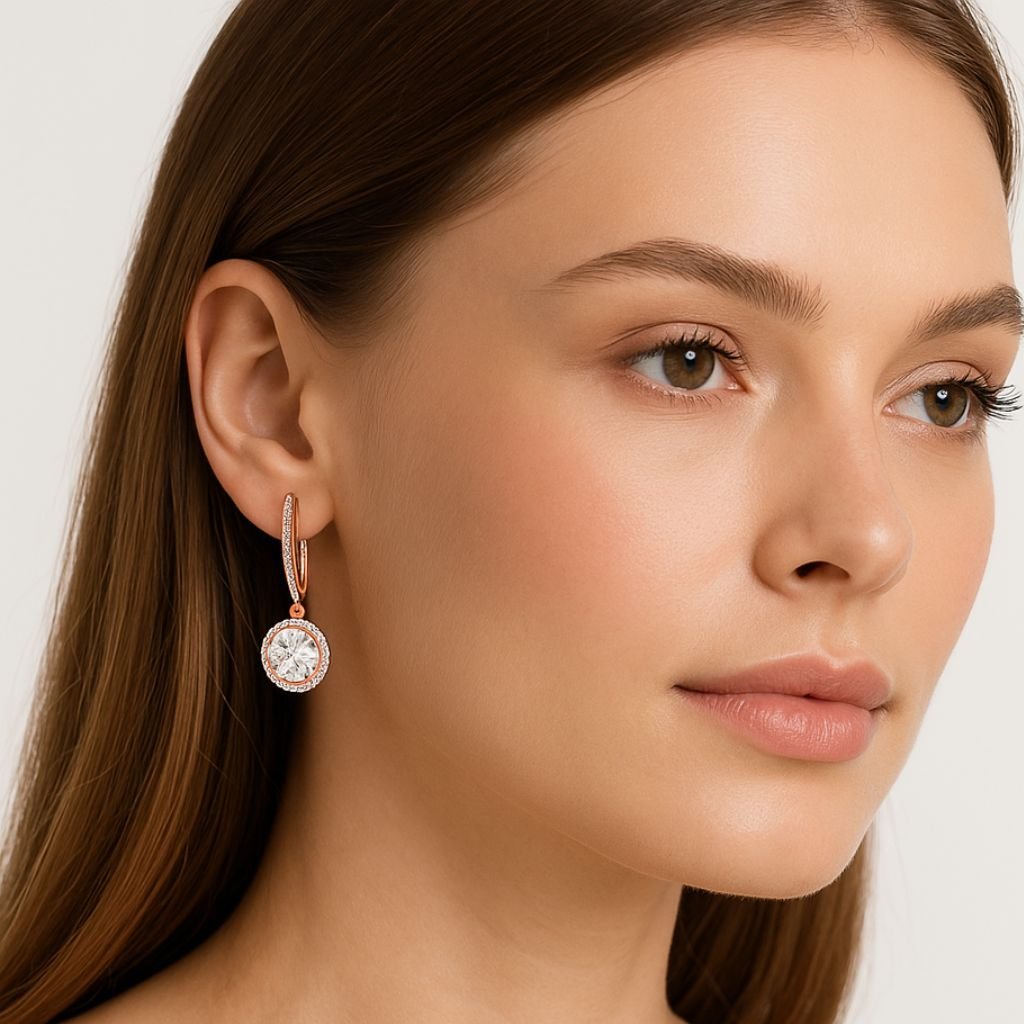
South Indian bridal earrings broadly fall into two categories: the long, swinging Jhumka (ideal for ceremony looks with a heavy saree) and the sophisticated diamond drop or chandelier earring (ideal for reception looks with a lehenga or a draped silk).
One consideration many brides overlook: earring weight. A beautiful pair of long gold Jhumkas can cause significant discomfort after four or five hours of ceremonies. Look for earrings with a screw-back or tension-back mechanism — they distribute weight better than standard push-backs and keep earrings secure through hours of rituals.
For reception earrings, oval or pear-shaped diamond drops in a white gold or platinum setting have become the Hyderabad bride’s signature in recent years. If diamond quality is important to you, refer to our guide on the 4Cs of diamonds explained for Indian buyers — understanding cut, colour, clarity, and carat will help you evaluate any pair with confidence.
2.3 Bangles and Kadas: Layering the Traditional Way
Bangles in South Indian bridal tradition are typically worn in multiples — glass bangles from the Muhurtam, gold kadas, and sometimes a diamond or polki kada for the reception. The Vaanki (armlet/upper arm bracelet) is also a distinctive South Indian bridal piece that many brides incorporate.
When buying gold kadas for the wedding ceremony, prioritize weight uniformity — a set of kadas that differ too much in weight will shift and feel unbalanced. For a modern reception look, a single broad diamond kada or a sleek tennis bracelet pairs beautifully with a diamond necklace without visually competing with it.
3. Diamond Jewelry for the South Indian Bride: What to Know Before You Buy
3.1 Natural Diamonds vs. Lab-Grown: The Honest Answer for Bridal Jewelry
This is the question Hyderabad brides ask most often right now, and it deserves a straight answer. At Aqua Diamonds & Jewels, we work exclusively with 100% natural diamonds — and for bridal jewelry specifically, that choice matters more than in any other purchase.
Bridal jewelry is bought with the expectation of emotional and financial longevity. Natural diamonds have a proven resale and heirloom market. Lab-grown diamonds, while optically identical, have seen significant price erosion over the past few years — their value does not hold the same way. For a deeper look at both options, our blog on natural vs lab-grown diamonds for Indian buyers covers every angle you need to make an informed decision.
3.2 Why IGI Certification Is Non-Negotiable for Bridal Diamonds
If you are spending on a diamond necklace, earrings, or ring for your wedding, it must come with an IGI (International Gemological Institute) certificate. No exceptions. The IGI certificate is the only third-party guarantee that the diamond you are buying is what the jeweler says it is — confirming the 4Cs, the cut quality, fluorescence, and any treatments the stone has undergone.
Every diamond piece at Aqua Diamonds comes with a valid IGI certificate. We walk customers through reading their certificate at the time of purchase — because a certified diamond you understand is worth far more to you than a certificate you keep in a drawer. To understand exactly what an IGI certificate covers and why it matters, read our detailed guide: What Is an IGI Certificate and Why It Matters for Your Diamond.
3.3 Diamond Quality Priority for Bridal Pieces
For bridal jewelry, this is the quality hierarchy that actually matters:
Cut first. Cut determines brilliance — how the stone catches light. A well-cut VS2 diamond will look more beautiful than a poorly cut VVS1. Always prioritize Excellent or Very Good cut grades.
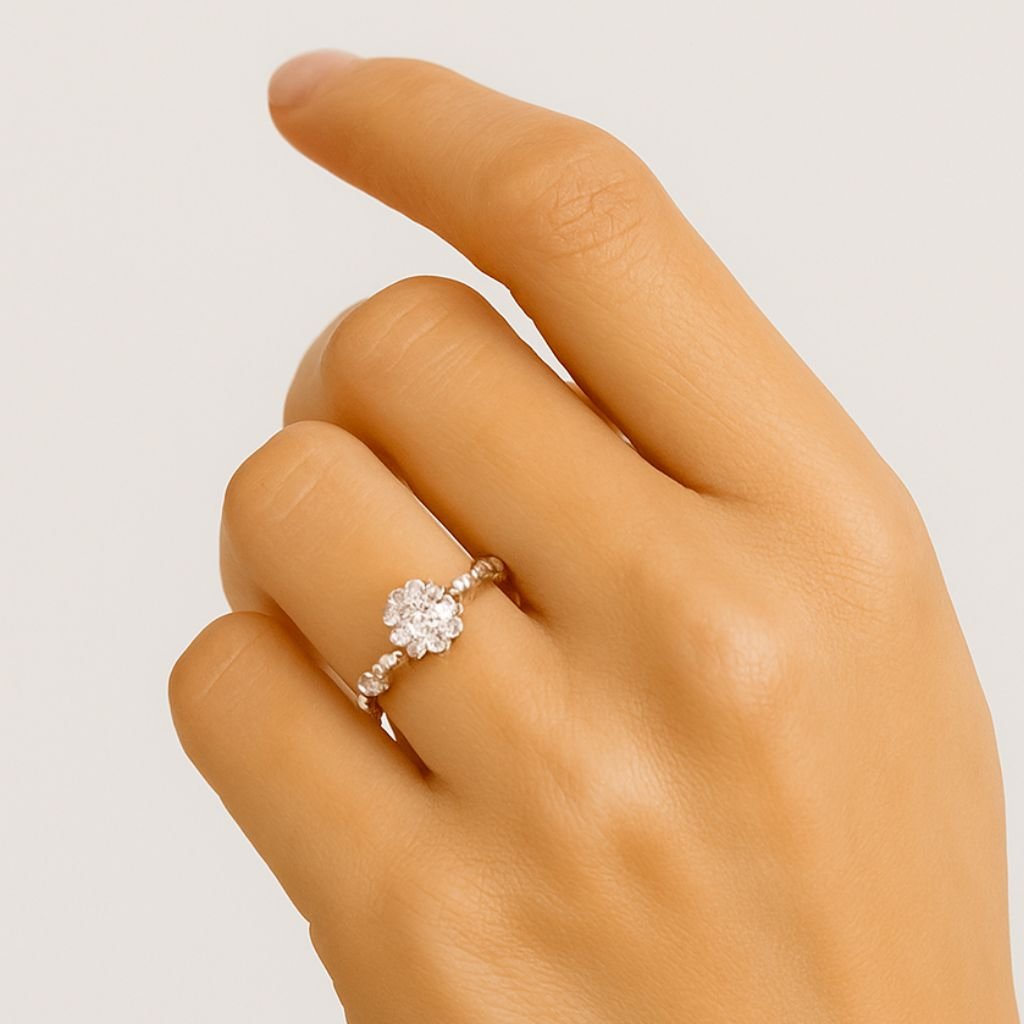
Colour second. For white gold or platinum settings, target G-H colour — they appear white to the eye and represent excellent value. For yellow gold settings, you can go as low as I-J colour because the gold warmth masks any faint tint.
Clarity third. For most bridal pieces, VS1-VS2 is the sweet spot. The inclusions are invisible to the naked eye, and you are not paying the premium of VVS or FL grades that only a loupe can distinguish.
Carat last. Bigger is not always better. A 0.80ct Excellent cut diamond outperforms a 1.00ct Good cut diamond in every visual category.
4. Jewelry Care and Maintenance for Bridal Pieces
4.1 Before the Wedding: What to Do in the Week Before
The week before your wedding is not the time for major cleaning or repairs — it is too close. Instead:
- Have your pieces professionally cleaned 10–14 days before the event, not the night before. Prongs and settings need to be checked for any looseness, and you need buffer time for any minor adjustments.
- Store each piece separately in its individual box or pouch — never stack jewelry loose in a bag. Diamonds will scratch gold, and gold will scratch softer stones.
- Do not apply perfume, hairspray, or setting spray directly near your diamond jewelry. The chemical residue dulls the surface over time and is the most common cause of a diamond looking “cloudy” after the wedding.
4.2 Wearing Jewelry Through Long Ceremony Days
South Indian weddings often run for six to eight hours of active ceremonies. A few practical tips most brides wish they had known:
- Put heavy earrings on last and remove them during breaks if your ears feel strained. This prevents the dreaded torn earlobe that more brides experience than will admit.
- Keep a soft cloth pouch in your bridal bag for any pieces you remove during the event.
- If you are wearing a mangalsutra or thali that is being tied during the ceremony, make sure it has been measured and adjusted beforehand — an ill-fitting chain causes real discomfort during the knot-tying ritual.
4.3 Post-Wedding Storage and Long-Term Care
After the wedding, proper storage protects your jewelry’s value and appearance:
- Store diamonds away from other diamonds — even between pieces in the same set. Diamonds scratch each other.
- Gold jewelry, especially high-karat bridal pieces, can develop minor dents. A professional jeweler can restore shape without remelting.
- All Aqua Diamonds purchases come with a 1-year warranty, which covers manufacturing defects and includes a complimentary professional cleaning. Use it.
- For long-term storage beyond a year, a bank locker is worth the annual fee for significant pieces.
5. Planning Your Bridal Jewelry Shopping: A Timeline That Works
5.1 Six to Eight Months Before the Wedding
This is when to start, not two months out. The reasons are practical: custom pieces need 8–12 weeks of crafting time, and if you want specific modifications to a design — a different chain length, a stone upgrade, a resized bangle — those conversations need time.
Use this window to establish your overall budget, divide it across categories, and begin trying on pieces. Do not buy at this stage — try on. South Indian bridal jewelry is heavily textured and layered, and pieces that look stunning individually can visually compete when worn together. You need to see combinations before committing.
5.2 Three to Four Months Before: Make Your Major Purchases
Once you have shortlisted pieces and confirmed your looks, make your primary purchases in this window. This gives time for:
- Custom adjustments and sizing
- IGI certification verification
- Resizing rings or bangles if your weight fluctuates slightly closer to the wedding (which is common)
This is also the right time to confirm your reception diamond pieces. Good stones at specific specifications are not always in stock — giving your jeweler lead time means you get the stone you want rather than the closest available alternative.
5.3 Final Month: Accessories and Final Fittings
The final month is for smaller decisions — the matching ring to a necklace, the earrings for a pre-wedding function, or the Waist Belt (Oddiyanam) that ties the look together. More importantly, this is when you should do a full bridal jewelry try-on with your complete wedding look — saree, makeup, and all pieces together.
Many brides discover in this session that one piece is overwhelming or that a necklace sits wrong with a particular blouse neckline. Better to discover this with a month to spare than on the morning of the wedding.
6. Why Choose Aqua Diamonds & Jewels for Your Bridal Jewelry
We are a Hyderabad-based diamond jeweler, and “trust” is not something we expect you to take on faith — it is something we build through specifics.
Every diamond we sell is 100% natural and IGI certified. You will never leave our store with a stone that has not been independently verified by the International Gemological Institute. We walk you through your certificate at the time of purchase so you understand exactly what you are buying.
We do not pressure. We educate. Buying bridal jewelry is one of the most significant purchases a family makes. Our approach is to give you the knowledge you need — on diamond quality, on gold weight, on making trade-offs intelligently — and then let you make the decision. If that takes three visits over two months, that is completely fine with us.
Our 1-year warranty is real. Every piece comes backed by a comprehensive warranty that covers manufacturing defects and includes complimentary professional cleaning. We stand behind what we sell.
Custom work is part of what we do. If you have seen a design you love and want it recreated with a different stone specification, chain length, or finishing, we handle that in-house. You are not passed off to a third party.
We understand South Indian bridal traditions. When you come to us for bridal jewelry, you are talking to a team that understands the difference between Muhurtam jewelry and reception jewelry, the significance of a Mangalsutra, and why certain pieces need to be purchased months in advance. That context matters.
Frequently Asked Questions
Q1: How many months before the wedding should I start buying bridal jewelry in Hyderabad?
Start 6–8 months before your wedding date. This timeline allows for custom pieces that need 8–12 weeks of crafting, any resizing or adjustments, and the important step of trying on combinations before committing. Brides who wait until 1–2 months before the wedding frequently face limited stock, no time for customization, and the stress of rushed decisions on high-value purchases.
Q2: Is it better to buy diamond jewelry or gold jewelry for the wedding ceremony?
For the wedding ceremony itself — the Muhurtam, the mandap rituals — traditional heavy gold jewelry is culturally appropriate and visually correct. Diamond jewelry truly shines at the reception, where the lighting, the photographer’s flash, and the more modern aesthetic all work in its favor. The ideal approach is to budget for both: gold-heavy ceremony pieces and diamond-forward reception pieces.
Q3: What is an IGI certificate and why does my bridal diamond jewelry need one?
An IGI (International Gemological Institute) certificate is an independent, third-party assessment of a diamond’s quality — confirming its cut, colour, clarity, carat weight, and any treatments. For bridal jewelry, it is non-negotiable because it is the only documentation that proves the diamond’s stated quality is real. Without it, you are relying entirely on the jeweler’s word. Every diamond at Aqua Diamonds & Jewels is IGI certified. For a full explanation, read our guide on what an IGI certificate is and why it matters.
Q4: What diamond quality should I look for in a bridal necklace or earring set?
For bridal pieces, prioritize in this order: Cut (Excellent or Very Good), then Colour (G–H for white gold settings), then Clarity (VS1–VS2 is the practical sweet spot), and finally Carat. A beautifully cut G colour VS2 diamond will outperform a poorly cut D colour VVS2 in every visual test. For a complete breakdown of how these qualities interact, see our guide on the 4Cs of diamonds for Indian buyers.
Q5: Should I choose natural diamonds or lab-grown diamonds for my bridal jewelry?
For bridal jewelry, we recommend natural diamonds. Bridal pieces are bought as heirlooms — they are passed down, resold, or re-used for significant family occasions. Natural diamonds have established resale value and a track record as a store of wealth. Lab-grown diamonds have seen sharp price declines in recent years, meaning the stone you purchase today may appraise significantly lower in five years. Aqua Diamonds works exclusively with 100% natural diamonds for exactly this reason. For a detailed comparison, read Natural vs Lab-Grown Diamonds: What Every Indian Buyer Must Know.
Q6: How should I care for my bridal diamond jewelry after the wedding?
Three key rules: store pieces separately (diamonds scratch each other and gold), avoid direct contact with perfume and chemical sprays, and use your warranty. All Aqua Diamonds pieces come with a 1-year warranty that includes a complimentary professional cleaning — use it 6 months after the wedding to restore brilliance before any anniversary or family function. For longer storage, a bank locker for significant diamond and gold pieces is a practical investment.
Ready to Begin Your Bridal Jewelry Journey?
Bridal jewelry is one of the most personal purchases you will ever make. The right pieces — chosen with knowledge and care — will be worn at your daughter’s wedding someday. We would love to be part of that story.
📱 Chat with us on WhatsApp: wa.me/919121118880 Book a quick conversation with our bridal jewelry specialists. Ask questions, share your budget range, and get honest guidance before you visit.
📅 Book a Private Appointment: aquadiamonds.co/book-an-appointment Come in for a dedicated bridal consultation at our Hyderabad showroom. We will walk you through every category, help you try on combinations, and build a jewelry plan that works for your timeline and budget.